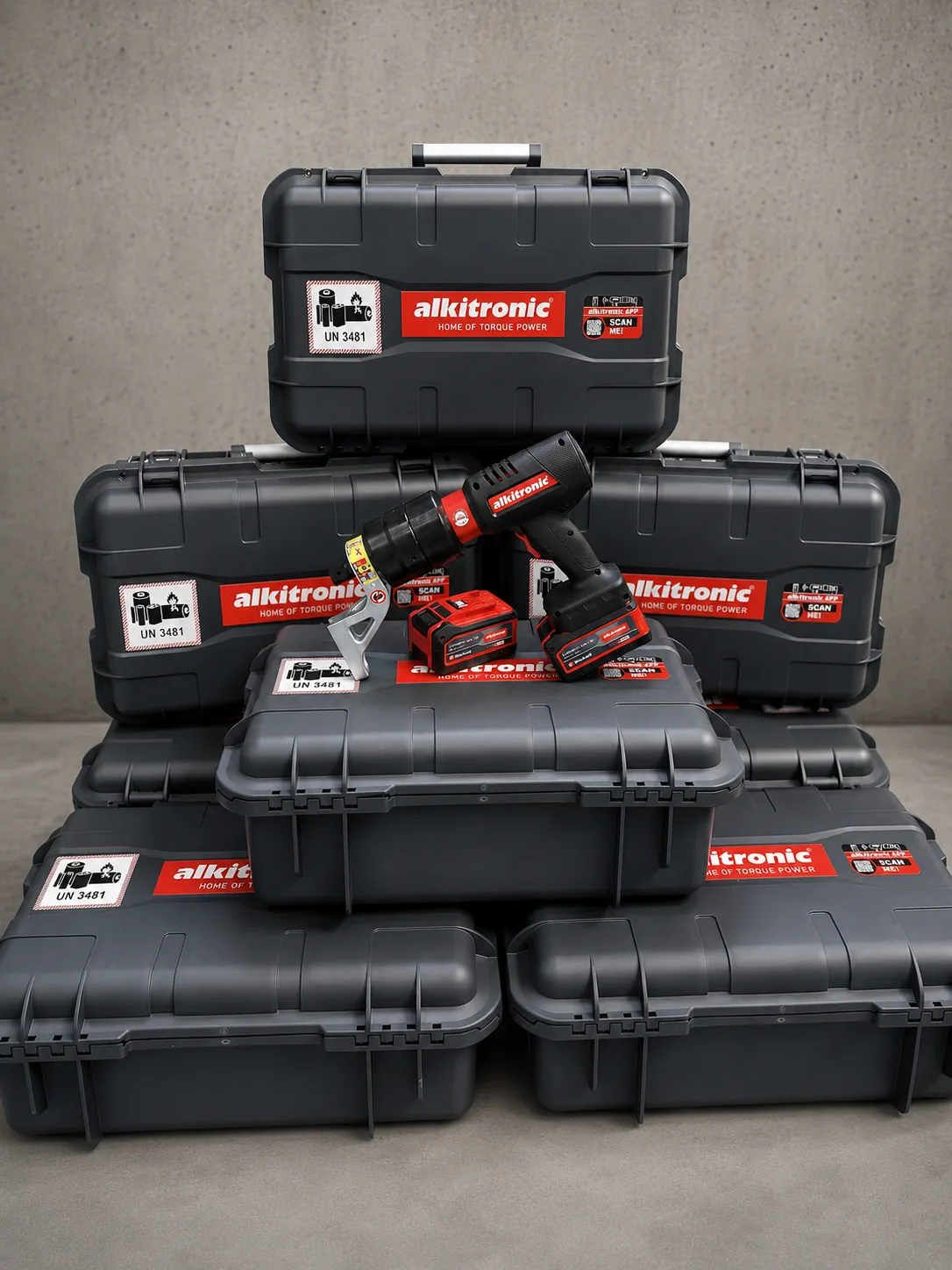
We recently delivered eight Alki EB-S 150 cordless nut runners to a leading company in the installation of high-voltage utility poles. The machines are being used in the construction of a new type of utility pole for the Dutch power grid. This is a good opportunity to take a moment to consider what this type of tool does, why it works, and why choosing a strong German brand in this segment is no coincidence.
Why Controlled Tightening Isn't a Luxury
A high-voltage transmission tower consists of hundreds of bolts and nuts that, together, provide the structure with its rigidity and load-bearing capacity. Each bolted joint must be tightened within a precisely specified torque range. If it is too loose, the joint may eventually give way under wind loads. If it is too tight, you risk overloading the bolt or damaging the coating.
In structural construction, controlled tightening is therefore not an option but a requirement. Yet in practice, it is not always easy to consistently implement this on a construction site—at heights of tens of meters, in varying weather conditions, with a crew that must keep working. That’s where tools not designed for these conditions come back to haunt you.
The Alki EB-S 150 in this application
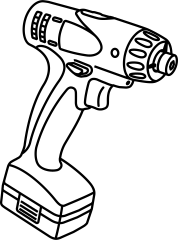
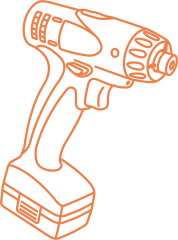
The Alki EB-S 150 is a battery-powered impact wrench designed for heavy-duty industrial applications where high torque and reliability are essential. With a torque range of 150–1,400 Nm and a weight of 5.3 kg, the tool is tailored to the type of work typically performed in mast construction. A number of features make this type of tool ideally suited for this application:
Controlled tightening torque. The set torque is achieved with precision, without the operator having to rely solely on feel or experience. This ensures consistency and, importantly, the ability to document the connection. In an era when clients and certifying bodies are increasingly demanding demonstrable quality, this is a key feature.
Battery-powered. No cables, no air hoses, no compressor at the base of the mast. An operator can move freely at height without worrying about hoses getting caught or having to carry them between workstations. The two included 18V / 5.2Ah Li-Ion batteries can power up to 360 screw connections per battery (depending on bolt type and torque applied), allowing a crew to work through an entire workday without the power supply limiting productivity.
Ease of use. A nut driver is sometimes used for hours on end. On such days, weight, balance, and ease of operation make a big difference for the operator. The EB-S 150 was designed with this in mind, featuring ergonomics that remain comfortable even after a long day on the mast.
Durability. Construction sites are not controlled factory environments. Tools used in these settings must be able to withstand dust, rain, impacts, and fluctuating temperatures. The German engineering behind the Alkitronic brand has stood for this for years.
The Alki Brand
Alkitronic GmbH is a German manufacturer with 42 years of experience in industrial fastening technology. The brand specializes in mechanical and electric nut runners for heavy-duty applications, ranging from steel structures and bridge construction to wind turbines and energy infrastructure. What sets Alki apart is its combination of technical precision, durability, and a focus on practicality: tools that must perform on the job site, day in and day out.
In a market where many brands compete primarily on specifications, Alki stands out for the ruggedness and longevity of its machines. That is exactly what users in these applications value, because when a tool stops working, an entire crew quickly comes to a standstill. And you can’t just get a crew working again when they’re dozens of meters up in the air.
What This Project Says About the Market
The delivery of these eight machines is not an isolated event. We are seeing a clear shift in the market toward tools that combine both productivity and traceability. Clients in the energy infrastructure sector not only want to know that a connection has been properly tightened, but also want to be able to demonstrate at what torque, at what time, and by which operator.
Battery-powered nut runners with adjustable and displayable torque fit perfectly into this trend. For specialists in mast construction, wind energy, and infrastructure, this means that choosing the right tool is not just a matter of productivity, but also a quality decision that is reflected in the final result.
In conclusion
For Archey, a delivery like this is more than just a transaction. It’s confirmation that our customers count on us when it matters most, and that they trust our combination of the right brand, the right machine, and the right advice. The eight Alki EB-S 150 machines are now on their way to the construction site. The masts are ready to go up.
Want to learn more about the Alki EB-S 150 or other battery-powered impact wrenches?