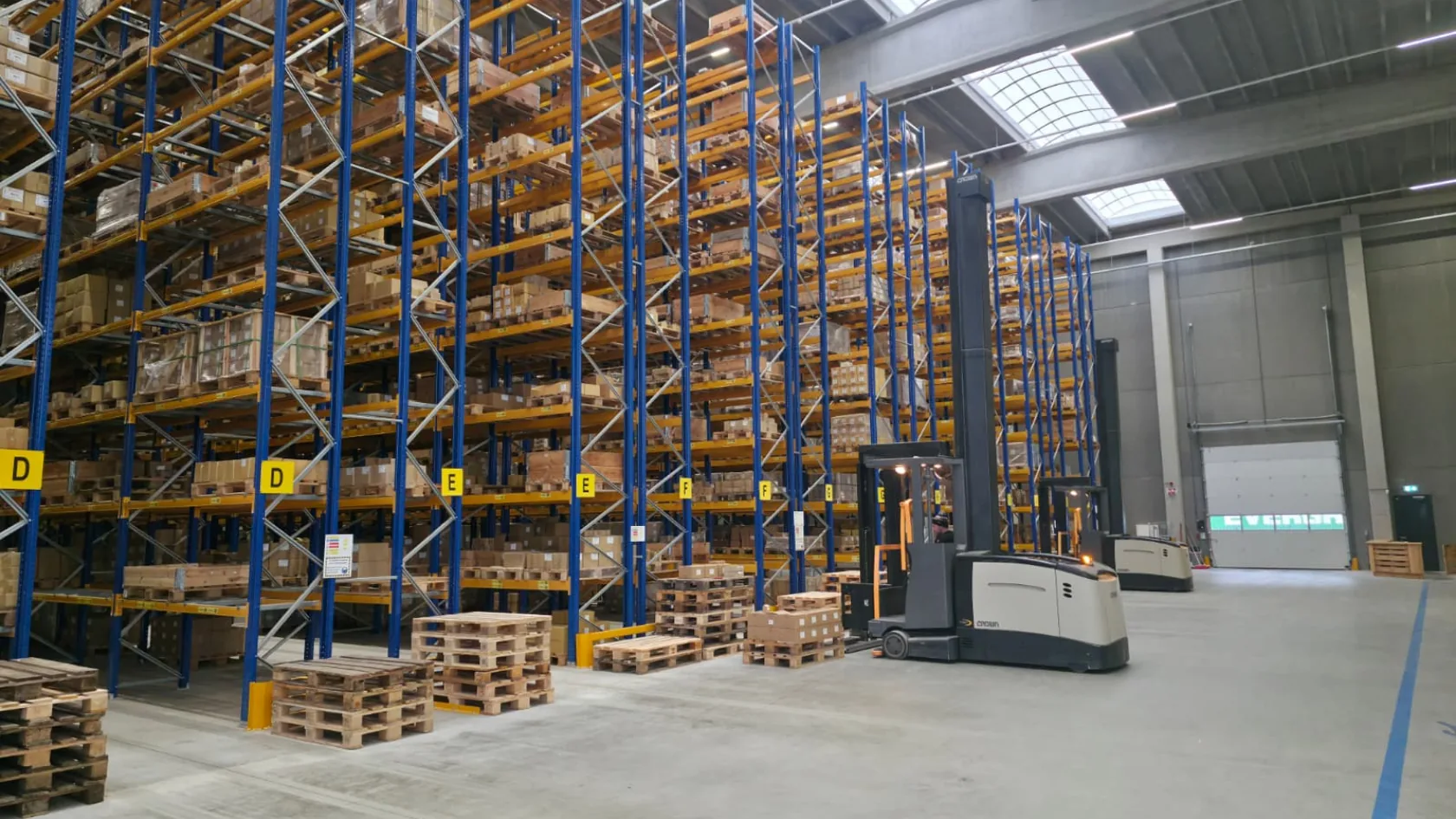

Illustrative warehouse inventory; not an Archey location.
Short answer: Effective fastener inventory management starts with a list of critical items, actual consumption, expected replenishment time, and the consequences of shortages. Also document alternatives, documentation, and a designated person responsible for reporting issues.
1 Which articles are truly critical?
Start with the application, not with the price or the quantity on the shelf. Which fastener would prevent a scheduled maintenance shutdown if it were missing? Which variant is needed for a safety-critical connection or a hard-to-reach machine? For each item, link it to the machine, drawing, bill of materials, and internal part number. A standard bolt used in many machines can be more critical than a rare, specialized part. Involve maintenance, production, and work planning: they often understand the consequences of a shortage better than the order history reveals.
2 What is the actual fuel consumption?
An average calculated over an entire year masks peaks. Consider scheduled overhauls, breakdowns, seasonal fluctuations, and concurrent projects. Also, note how many units are lost during a typical assembly process due to trial assembly, rejection, or damage. Distinguish between regular consumption and one-time project demand; otherwise, the minimum stock level will remain structurally too high after a peak. A simple monthly review of the fastest-moving and most critical items is often more useful than a detailed calculation that no one keeps track of.
3 How long does refilling actually take?
Lead time involves more than just transportation. Consider internal approval, production or processing, surface treatment, quality control, and receipt. For non-standard materials or special sizes, explicitly ask which step determines the delivery time. Record the expected replenishment time alongside the desired availability. A minimum stock level can then be tailored to consumption during that period, with an appropriate buffer to account for uncertainty. Do not use a generic safety stock for everything: an easily replaceable item requires a different approach than a project-specific fastener.
4 Has an alternative been technically approved?
Two bolts with the same nominal size are not automatically interchangeable. Material, strength class, coating, thread, head shape, fastening method, and assembly process may vary. Have the engineering department determine in advance whether an alternative is permitted and under what conditions. Record that decision with the item code. This way, a buyer does not have to assess technical equivalence themselves during a rush order. If no alternative is available, that item deserves special attention in the inventory and supplier agreement.
5 What documents should be included with the delivery?
An item may be physically present but still unusable if the required certificate or link to the batch is missing. For each application, specify which material or inspection documents are required, how the batch is identified, and where documents are stored. Discuss these requirements before placing an order. Upon receipt, verify that the item, quantity, markings, and documentation match. This step prevents a stock level from appearing sufficient on paper while quality issues prevent release.
6 Who can spot a shortage coming in time?
For critical items, designate an owner and a specific trigger: a minimum stock level in the system, a periodic count, or a notification from the maintenance schedule. Agree on who will assess any discrepancies and who will contact the supplier. Also keep track of which items are no longer in use. Otherwise, inventory will grow while the actual shortage remains hidden. A brief meeting between purchasing, maintenance, and production regarding upcoming work orders turns the alert into a timely decision.
What do you include in the list for each critical article?
A useful list includes more than just a stock number. On a single line, include the internal and supplier codes, complete technical specifications, application, current usage, expected replenishment time, and owner. Attach the required documents and reference an approved alternative, if one exists. Also include the most recent review date. This allows a colleague to immediately see whether the minimum quantity still aligns with the current machine and schedule. Assign a separate status to items that haven’t been used for months, rather than tacitly keeping them on hand as a safety measure.
A simple math example
Suppose a maintenance team normally uses twenty units per week and a restock arrives after three weeks. During that restocking period, approximately sixty units are needed. That is a starting point for a reorder signal, not a universal minimum. Expected peaks, variations in lead time, returns, and the severity of downtime may justify an additional buffer. If the same item is needed 200 times during a overhaul week, plan that work order separately. The numbers are illustrative; the decision is based on your own consumption and supplier data.
How do you discuss the results with a supplier?
Do not send a list containing only item numbers. Specify which variants are critical, how often they are used, when planned peaks are expected, and what documentation is required. Ask what availability and replenishment times are realistic for that specific variant. Discuss whether a framework agreement, phased delivery, or other inventory management strategy would be helpful. Establish which indicators both parties will use. This will allow the supplier to make an appropriate proposal without promising that every item will always be available immediately.
Mini-audit for a work order
Take the next maintenance order and try to find the specifications, stock levels, and replenishment times for each required fastener within a few minutes. If an answer is missing, note where the information should be located and who can provide it. This simple exercise will show whether the list works in practice.
From Six Responses to a Workable Agreement
Start with the ten items that would have the greatest operational impact if they were missing. For each item, document its application, specifications, consumption, replenishment time, alternatives, documentation, and owner. Review the list after any changes to the design or maintenance plan. We’d be happy to work with you to assess the availability and specifications of the fasteners on that list. Please bring the item details and usage scenario with you; that will help us focus our discussion right away.